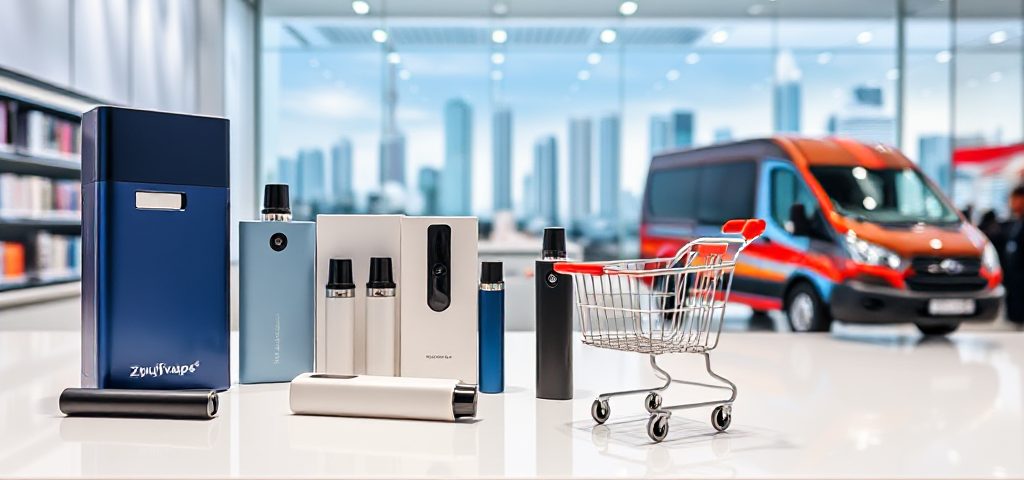
Same Lana Ultra 2, Different Stores: What Service Differs
The Lana Ultra 2 is the same product everywhere. That is the first thing a comparison shopper learns, and it is also the thing that makes the shopping decision harder rather than easier. When the device itself does not change from listing to listing, the real differences between Singapore stores sit in the service around it — how fast a parcel arrives, whether cash changes hands at the door, how quietly the box is packed, and whether the person on the other end of the chat actually knows the stock they are selling.
This is a service-first comparison. It is written for the buyer who has already decided on the device and is now deciding on the store. If you are still mapping the category, the lana pen plus 9k range is a useful reference point for how listings in this segment are structured, because the same service questions apply whether you are looking at a smaller pen format or a larger disposable. The device is fixed; the experience is not.
Below, each service dimension is contrasted across the kinds of stores a Singapore buyer is likely to encounter: the large multi-brand online retailer, the small social-media seller, the marketplace listing with no fixed storefront, and the WhatsApp-only operator. The point is not to crown a winner in the abstract, but to show where the differences actually show up.
Stock Consistency and Listing Accuracy
The first service dimension is the least glamorous and the most important: does the store actually have what the page says it has? A large online retailer with a managed inventory system can usually confirm availability in real time. When a listing says a device is in stock, it is in stock, and the order is picked the same day. A marketplace listing, by contrast, is often a single seller’s post that may be days or weeks old, and the stock status is whatever the seller last typed.
Small social-media sellers sit somewhere in between. They often do hold real stock, but the catalogue is scattered across posts, stories, and chat replies, so the buyer ends up doing the inventory work themselves. The practical test is simple: ask for a current photograph or a live availability confirmation before paying. A store that answers quickly and specifically is a store that knows its shelves.
Listing accuracy also covers variant confusion. A multi-brand retailer tends to separate flavours, puff counts, and device generations into distinct pages, which reduces the chance of receiving the wrong item. A chat-based seller may bundle everything into one conversation, and mistakes happen when the buyer and seller are describing the same product with different words. This is a service difference, not a product difference, and it shows up long before delivery day.
Delivery Speed and Cut-Off Times
Delivery is where the gap between store types becomes obvious. In Singapore, the practical expectation for a well-run online vape retailer is same-day or next-day delivery within the main residential areas, with a clear cut-off time after which orders roll to the next working day. That cut-off is a service commitment, and a store that publishes it is a store that has thought about its operations.
Smaller sellers often deliver quickly too, but the speed depends on the seller’s own schedule rather than a system. If the seller is free, the parcel moves. If the seller is busy, it waits. There is nothing dishonest about this, but it is unpredictable, and unpredictability is the thing a comparison shopper is trying to avoid.
Marketplace listings introduce a third pattern: the seller may be a reseller who does not hold stock at all and has to source the item after the order is placed. That adds a hidden day or two to the timeline. When you compare stores, ask directly whether the item ships from local stock or from a supplier. The answer tells you more about delivery speed than any advertised promise.
Cash on Delivery and Payment Flexibility
Cash on delivery, usually shortened to COD, is one of the clearest service differentiators in the Singapore market. A store that offers COD is accepting risk on the buyer’s behalf, and that changes the entire feel of the transaction. You inspect the parcel, confirm the contents, and pay the courier. If something is wrong, the conversation happens before money moves.
Larger online retailers are more likely to offer COD as a standard option alongside bank transfer and digital payment methods, because they have the logistics relationships to support it. Smaller social sellers may offer COD only within their own neighbourhood, or only when the order value is high enough to justify the trip. Marketplace sellers frequently refuse COD entirely and ask for advance payment, which shifts all the risk to the buyer.
Payment flexibility is worth weighing alongside price. A slightly higher listed price at a store that offers COD and a clear returns path can be better value than a lower price at a store that demands a transfer to a personal account with no recourse. The marbo vape 25k listings are a good example of a product category where buyers often compare stores specifically on whether COD is available, because the order value is high enough that payment method matters.
Discreet Packaging and Privacy Handling
Discreet packaging is not a marketing flourish; it is a service standard, and it varies widely. A professional online retailer ships in plain outer packaging with no product names, no brand logos, and no indication of contents on the label. The courier sees a box. The neighbour who signs for it sees a box. That is the whole point.
Smaller sellers sometimes reuse branded boxes or pack items loosely, which undermines the discretion the buyer expected. This is rarely malicious — it is simply a lack of process. But for a buyer who chose an online store partly for privacy, a branded box on the doorstep is a real failure of service.
Privacy also covers data handling. A store that collects only the address and contact number needed for delivery, and does not add you to a broadcast list without consent, is respecting the same discretion it applies to the parcel. When comparing stores, look at whether the checkout asks for more information than delivery requires. That is a quiet signal about how the store treats customer data.
Product Knowledge and Support Responsiveness
Support quality separates stores more sharply than any other dimension. A knowledgeable retailer can answer specific questions: how a device compares to a similar puff-count model, what the draw feels like, how long a charge lasts in practice, and which variant suits a particular preference. A generalist seller often cannot, and the conversation stalls into vague assurances.
Responsiveness matters as much as knowledge. A store that replies within minutes during business hours is operationally healthy. A store that replies the next day, or only after a follow-up, is telling you something about how it will handle a problem after the sale. The pre-sale chat is a preview of the post-sale chat.
This is where a well-organised catalogue helps the buyer as much as the seller. When a store lists distinct products with clear specifications, buyers can compare on their own and ask sharper questions. The lana pix 20k and lana pix pages, for instance, give a buyer enough detail to form a real question rather than a generic one, and a store that invites specific questions is usually a store that can answer them.
After-Sales Handling and Issue Resolution
After-sales service is the dimension buyers think about least and value most. A device that arrives faulty, a flavour that was packed incorrectly, a parcel that goes missing — these are the moments when the difference between store types becomes concrete. A structured retailer has a process: report the issue, provide evidence, receive a replacement or a resolution within a stated window. A chat-based seller has a relationship, which may be generous or may evaporate.
The key service question is whether the store publishes its after-sales terms before purchase. If the policy is visible on the site, the buyer knows what to expect. If the policy only appears when something goes wrong, the buyer is negotiating from a weak position.
Resolution speed also reflects operational maturity. Stores that hold local stock can replace an item quickly because they have inventory on hand. Stores that source per order have to wait for a supplier, which stretches the resolution timeline. When you compare, ask how a defective unit would be handled and how long a replacement typically takes. The answer is a direct read on the store’s service depth.
It is also worth noting that a broad catalogue is itself a service feature, because it lets a buyer consolidate orders and deal with one support channel instead of several. A store carrying everything from a compact pen format to larger disposables — the lana ultra 2, the marbo 25k, the snowwolf 16k, and heated-tobacco options such as terea singapore — gives a buyer one point of contact for a mixed order. Fewer conversations, fewer chances for something to go wrong.
How to Compare Stores in Practice
The practical method is to score each store on the six dimensions above and weight them according to what you actually care about. If privacy is your priority, packaging and data handling carry more weight. If speed matters, delivery cut-off and local stock carry more. If you want protection, COD and published after-sales terms carry more.
A short checklist helps: confirm live stock before paying, ask whether the item ships from local inventory, check whether COD is offered and under what conditions, confirm the packaging is unbranded, test support responsiveness with one specific question, and read the after-sales terms before checkout. Any store that answers all six clearly is a store worth using, regardless of which product you are buying.
The device is the same everywhere. The service is not, and in a market where listings look nearly identical, service is the only variable a comparison shopper can actually control. Choose the store that answers your questions, protects your privacy, and stands behind the parcel after it arrives.
Frequently Asked Questions
Why do different Singapore stores sell the same device at different prices?
Price differences usually reflect service differences rather than product differences. A store offering COD, same-day delivery, and a published replacement policy carries more operational cost than a seller who takes advance payment and ships when convenient. The lower price is sometimes genuinely better value, but it often means fewer protections if something goes wrong.
Is cash on delivery available for every vape order in Singapore?
No. COD availability varies by store and sometimes by order value or location. Larger online retailers are more likely to offer it as a standard option, while smaller social sellers may restrict it to nearby areas. Always confirm COD eligibility before placing an order if payment-on-delivery is important to you.
How can I tell whether a store actually holds local stock?
Ask directly whether the item ships from local inventory or is sourced after the order. You can also ask for a current photo or a live availability confirmation. Stores that hold stock answer quickly and specifically; resellers who source per order tend to give vague or delayed replies.
What does discreet packaging actually mean in practice?
It means the outer parcel carries no product names, brand logos, or content descriptions, and the courier cannot tell what is inside. A professional retailer uses plain outer packaging and limits label information to the delivery address. If a store cannot confirm this, treat it as a gap in service.